




Neurodivergence, Trauma and Substance Use: Looking Beyond the Behaviour
Through our work with community and rehabilitation services, including BRACE Community Response and Tallaght Rehabilitation Project, we have been exploring an important intersection that is still too often overlooked: neurodivergence, trauma and substance use.
These are not three separate conversations.
For some people, they are deeply interconnected.
What if we asked a different question?
When someone is experiencing problematic substance use, the focus can understandably become the substance itself:
How do we stop the behaviour?
But what happens when we look underneath it?
What is the substance doing for the person?
·Is it helping them regulate?
·Slow down racing thoughts?
·Cope with sensory overwhelm?
·Sleep?
·Feel more socially comfortable?
·Escape difficult memories or emotions?
·Manage anxiety, distress or an internal world that feels relentless?
This does not mean that substance use is always connected to neurodivergence or trauma. Nor does understanding its function mean ignoring the harm it may be causing.
It means recognising that behaviour usually makes more sense when we understand the context in which it developed.
Neurodivergence can change the picture
An Autistic person, a person with ADHD, or someone with another neurodivergent profile may have spent years navigating environments that did not understand or accommodate how they experience the world.
There may have been years of masking, sensory overload, difficulty with executive functioning, rejection, exclusion, misunderstanding or repeated experiences of being told that they were difficult, lazy, disruptive or simply needed to try harder.
For someone whose neurodivergence has never been recognised, there may not even be a framework for understanding why everyday life has felt so difficult.
Add trauma, poverty, homelessness, family difficulties or other significant life experiences, and the picture becomes even more complex.
Substance use may sometimes become part of how a person has learned to cope, regulate or survive.
That does not make it safe. But it can make it understandable.
And understanding gives us somewhere different to begin.
Moving beyond compliance
One of the things we explore in our work with services is what happens when traditional expectations around engagement meet a neurodivergent nervous system.
·Attend at this time.
·Sit in this room.
·Complete this form.
·Remember this appointment.
·Follow this programme.
·Talk about difficult experiences.
·Make these changes.
For some people, those expectations may be manageable.
For others, executive functioning differences, demand sensitivity, sensory needs, communication differences, trauma responses or difficulties with emotional regulation can make them significant barriers.
If those barriers are interpreted simply as someone being unmotivated, non-compliant or not ready to engage, we may lose the opportunity to understand what is actually happening.
Sometimes the question is not:
“Why won't this person engage?”
It is:
“What is making engagement difficult, and what can we change?”
Neuroinclusive and trauma-informed practice
This is where neuroinclusive and trauma-informed practice can make a meaningful difference.
It means creating greater structure and predictability, while still allowing flexibility.
It means considering sensory and communication needs.
It means reducing unnecessary cognitive load.
It means being curious about what sits behind behaviour rather than making assumptions about motivation.
It means recognising strengths alongside needs.
And importantly, it means working with the person rather than doing something to them.
In our training, we encourage practitioners to consider not only “What support does this person need?” but also:
“What might we need to change about the environment, our communication or our approach to make that support accessible?”
The importance of relationship
Across trauma-informed, neuroinclusive and substance-use services, one factor continues to matter enormously: relationship.
People are more likely to engage when they feel respected.
When they feel heard.
When their experiences are taken seriously.
When they are not reduced to a diagnosis, a behaviour, an addiction or a list of risks.
When there is psychological safety and dignity in the interaction.
This does not mean removing boundaries, expectations or accountability. It means creating the conditions in which change becomes more possible.
Learning from the services doing the work
Our work with organisations including BRACE Community Response and Tallaght Rehabilitation Project continues to reinforce why these conversations matter.
Frontline practitioners are working with people whose lives rarely fit neatly into one category.
Neurodivergence may intersect with trauma. Trauma may intersect with substance use. All of these may intersect with homelessness, poverty, mental health, family relationships, education, employment and experiences of exclusion.
If our services respond to only one part of that picture, we risk missing the person at the centre of it.
The goal is not to explain every behaviour through neurodivergence or trauma.
It is to become more curious about what we may not yet understand.
Because when we move from:
“What's wrong with this person?”
towards:
“What has this person experienced, how does their brain and nervous system work, and what might help?”
we create space for a very different kind of support.
And sometimes, that change in perspective is where meaningful change begins.
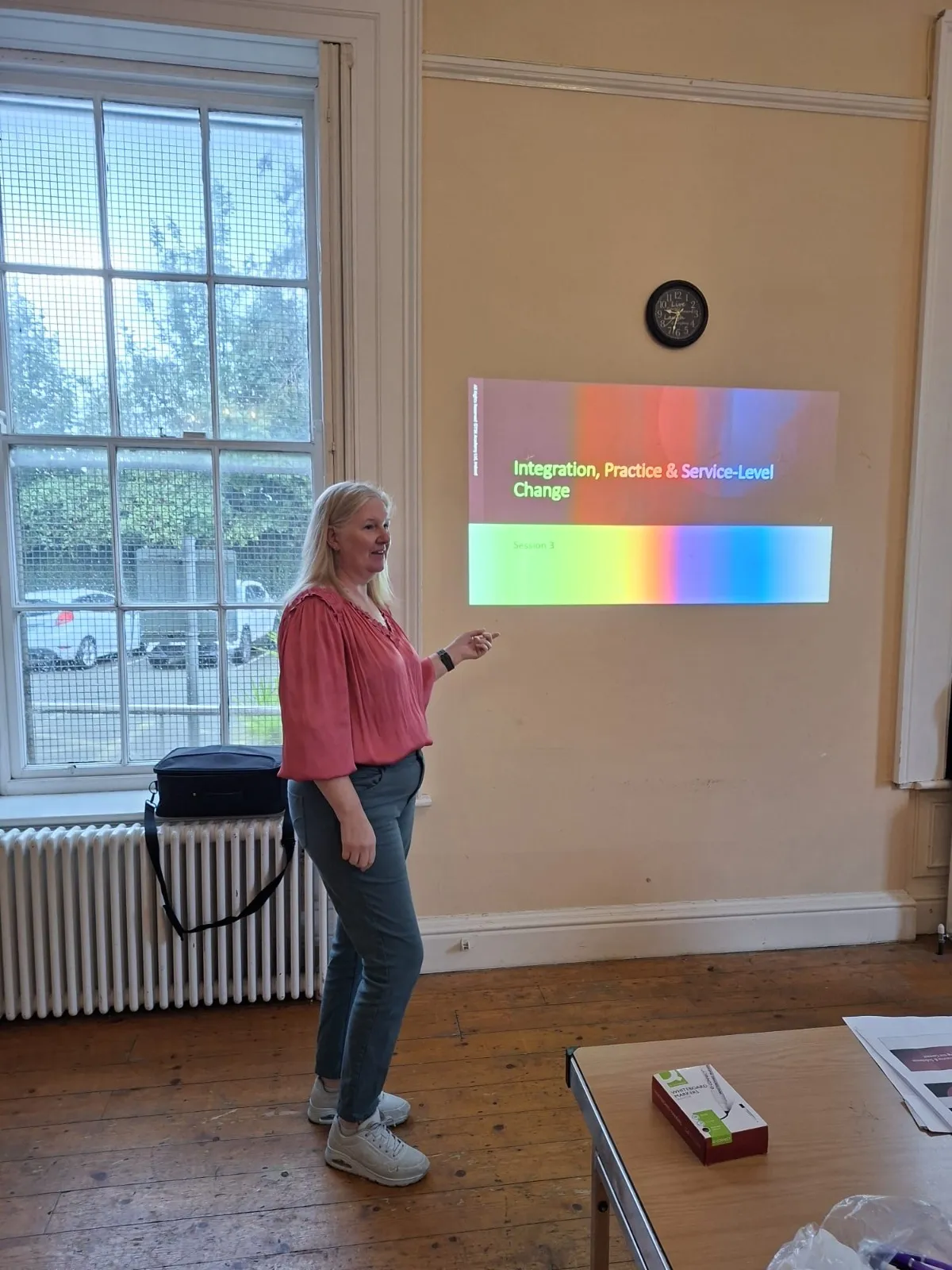
TSK Academy provides neuroinclusive and trauma-informed training for community, rehabilitation, homelessness, addiction and social care services.
Our programmes explore the practical intersection between neurodivergence, trauma, behaviour, regulation and substance use, helping teams move from awareness towards approaches that support dignity, autonomy and meaningful engagement.
If your service would like to explore training for your team, get in touch with TSK Academy.