


EUROPEAN ACCESSIBILITY ACT
“The European Accessibility Act: Why Inclusion Can No Longer Be an Afterthought”
Focus:practical implications of the EAA accessibility beyond physical access communication, sensory, cognitive accessibility psychological safety inclusion as everyday practice risks of “tick-box” approachesCTA: Promote EAA workplace training and consultancy.
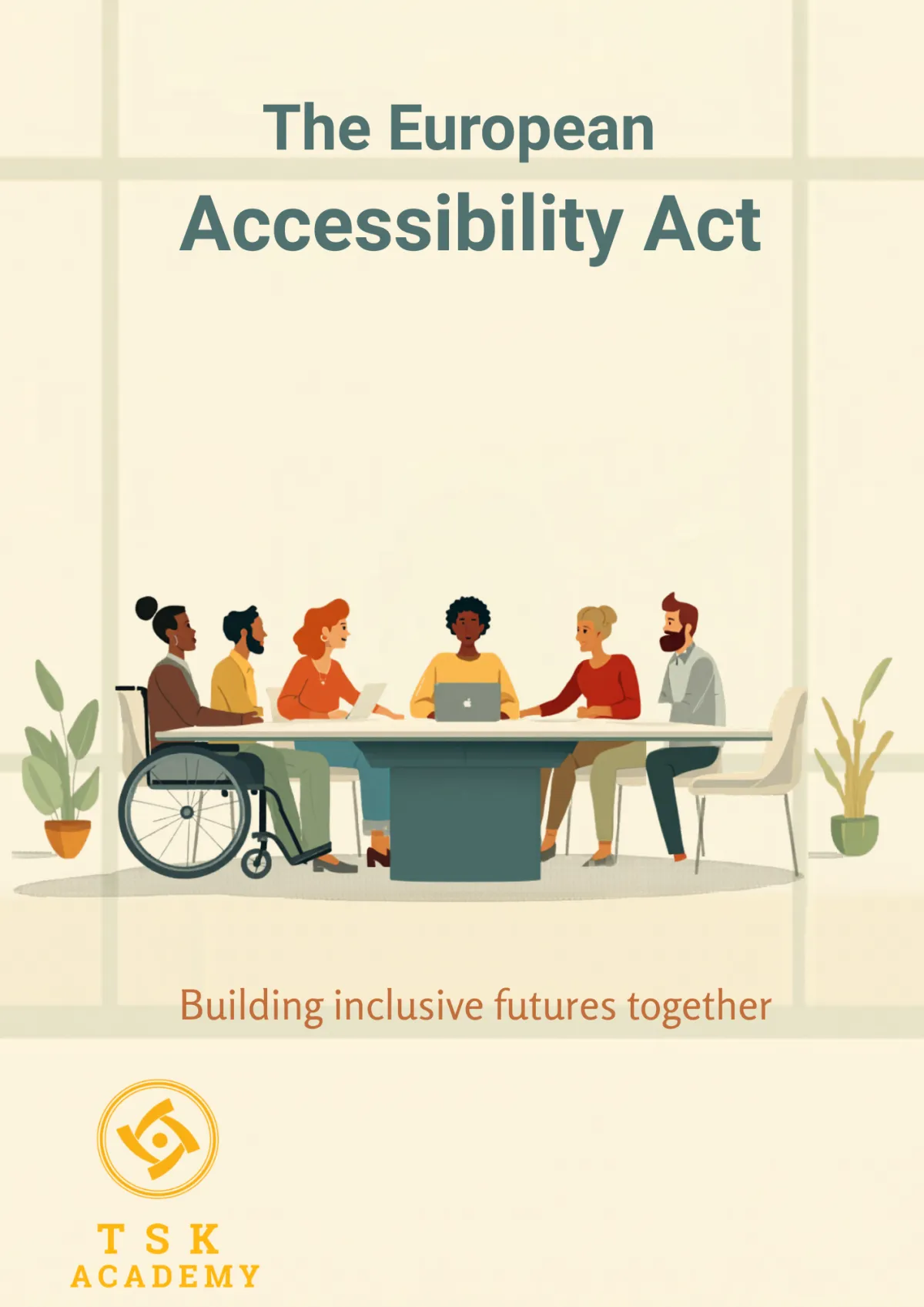
The European Accessibility Act: Why Inclusion Can No Longer Be an Afterthought
For many organisations, accessibility has traditionally been viewed as something separate. An additional consideration. A policy requirement. A checklist.
But the introduction of the European Accessibility Act (EAA) is shifting that conversation significantly.
Accessibility is no longer something organisations can afford to treat as optional or reactive. It is becoming part of how services, workplaces, communication, environments, and systems are expected to function from the outset.
And importantly, accessibility is about far more than physical access.
Accessibility Is About People
When people hear the word accessibility, they often think about ramps, lifts, or physical spaces.
While these are important, accessibility also includes:
communication accessibility
sensory accessibility
cognitive accessibility
digital accessibility
emotional and psychological safety
flexibility in how people engage, communicate, and participate.
For many neurodivergent individuals, barriers are often invisible to others.
Bright lighting, unclear instructions, overwhelming environments, rigid communication styles, inaccessible systems, excessive demands, unpredictable processes, or a lack of psychological safety can all impact someone’s ability to participate fully.
This is why meaningful inclusion requires organisations to think beyond minimum compliance.
Inclusion Cannot Sit Only on Paper
One of the biggest risks organisations faces is assuming that policies alone create inclusion.
A workplace may have inclusion statements, wellbeing initiatives, or accessibility policies in place, while employees still feel unsafe disclosing needs, asking questions, or requesting support.
Real inclusion is experienced in everyday interactions:
how managers communicate
how flexibility is approached
how meetings are structured
how feedback is delivered
how mistakes are responded to
how psychologically safe people feel to be themselves.
Accessibility and inclusion are lived experiences, not simply written policies.
The Business Impact Matters Too
Creating accessible and inclusive environments is not only ethically important — it also makes practical business sense.
Inclusive workplaces are more likely to:
improve staff retention.
reduce burnout and presenteeism.
strengthen innovation and creativity.
improve communication and team culture.
attract diverse talent.
improve employee wellbeing and engagement.
When people feel safe, understood, and supported, they are more able to contribute sustainably and effectively.
Moving Beyond Awareness
At TSK Academy, one of the key messages within our EAA and workplace inclusion training is that awareness alone is not enough.
Most organisations do not intentionally exclude people. However, many systems and environments were not designed with diverse needs in mind.
Meaningful inclusion happens when organisations begin asking:
What barriers might exist here?
Who may struggle silently within this environment?
What assumptions are built into our systems?
How can we create greater clarity, flexibility, predictability, and safety?
Small changes can often make a significant difference.
The Future of Inclusion
As conversations around accessibility continue to grow, organisations are increasingly recognising that inclusion is not separate from performance, wellbeing, or culture.
It is part of all of them.
The organisations that will thrive moving forward are those willing to move beyond performative inclusion and towards environments where accessibility, dignity, and belonging are embedded into everyday practice.
At TSK Academy, we continue to support organisations through training, consultancy, and practical workplace strategies that help turn inclusion from intention into action.